Design systems in the age of AI: tokens, components and generated interfaces
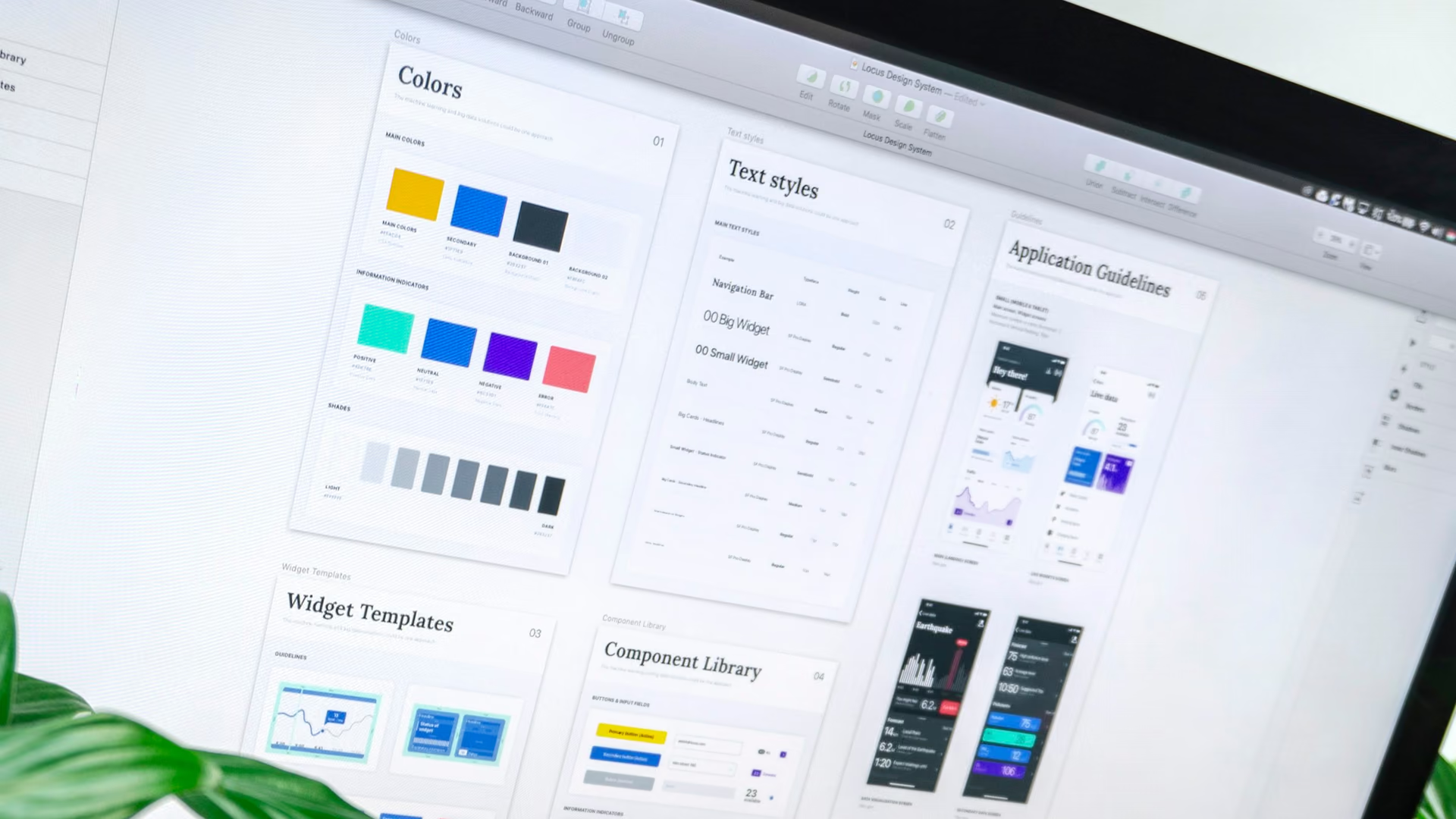
AI tools can already generate screens in seconds. The question is no longer whether AI will create interfaces but with what quality and consistency. That is where the design system becomes the most important piece of the process: it is the grammar the AI has to follow.
AI needs rules, not inspiration
An AI model generates interfaces from what it is given. Without clear references, it invents spacing, colours and components that look right but do not belong to the product. With a well-structured design system, the same generation starts using real, approved and documented pieces.
That changes the design system’s value inside the company. It stops being just a library for designers and engineers and becomes the foundation that keeps any interface, made by people or by AI, speaking the same language.
Tokens are the layer AI understands best
Tokens turn visual decisions into data: surface colour, primary action colour, medium spacing, corner radius. The more semantic that layer is, the easier it is for an AI to choose the right value by the role it plays rather than by how it looks.
The three-layer structure works well here: primitive tokens hold raw values, semantic tokens give them a role and component tokens tie the role to a specific part. An AI that generates interfaces by reading the semantic layer makes far fewer mistakes.

Documentation written for people and for machines
Classic documentation explains when to use each component. In the age of AI it also needs to be machine-readable: objective descriptions, consistently named properties, examples of correct and incorrect use and explicit composition rules.
In practice each component gets a short sheet: what it solves, when not to use it, which variants exist and how it combines with others. That sheet serves the designer new to the team and the assistant that generates the first version of a screen.
Designers curate, not only produce
With automatic generation, part of the work of assembling screens leaves the designer’s hands. What remains, and grows in weight, is curation: defining the rules, reviewing what the AI produces, spotting when a new pattern is needed and when it is just noise.
Governance becomes part of the system. A new component needs an owner, a reason and an entry criterion, or the design system turns into a store of generated variations.
One system, many platforms
When a single token source feeds iOS, Android and web, AI can generate interfaces for any of them without losing the product’s identity. That was the logic behind Luna, a design system where one token source drives Apple and Material components, in light and dark.
The result is less rework and more coherence. AI speeds up production, and the design system makes sure speed does not cost quality.